
The Homemade Crisis Room Is Already Obsolete
Key Takeaways
- ▸ Free OSINT dashboards (World Monitor, Glint) made real-time intelligence accessible to anyone with a browser.
- ▸ A dashboard is a tripwire, not a conclusion. Verification, chain of custody, and contextual analysis require trained researchers.
- ▸ Organizations confuse access with capability. "We checked" doesn't survive regulatory scrutiny.
- ▸ Five practical steps: treat dashboards as triggers, verify before briefing, document methodology, know blind spots, build the human layer.
The Monitoring Revolution Already Happened
Something shifted in the last 18 months that most security teams haven’t caught up to.
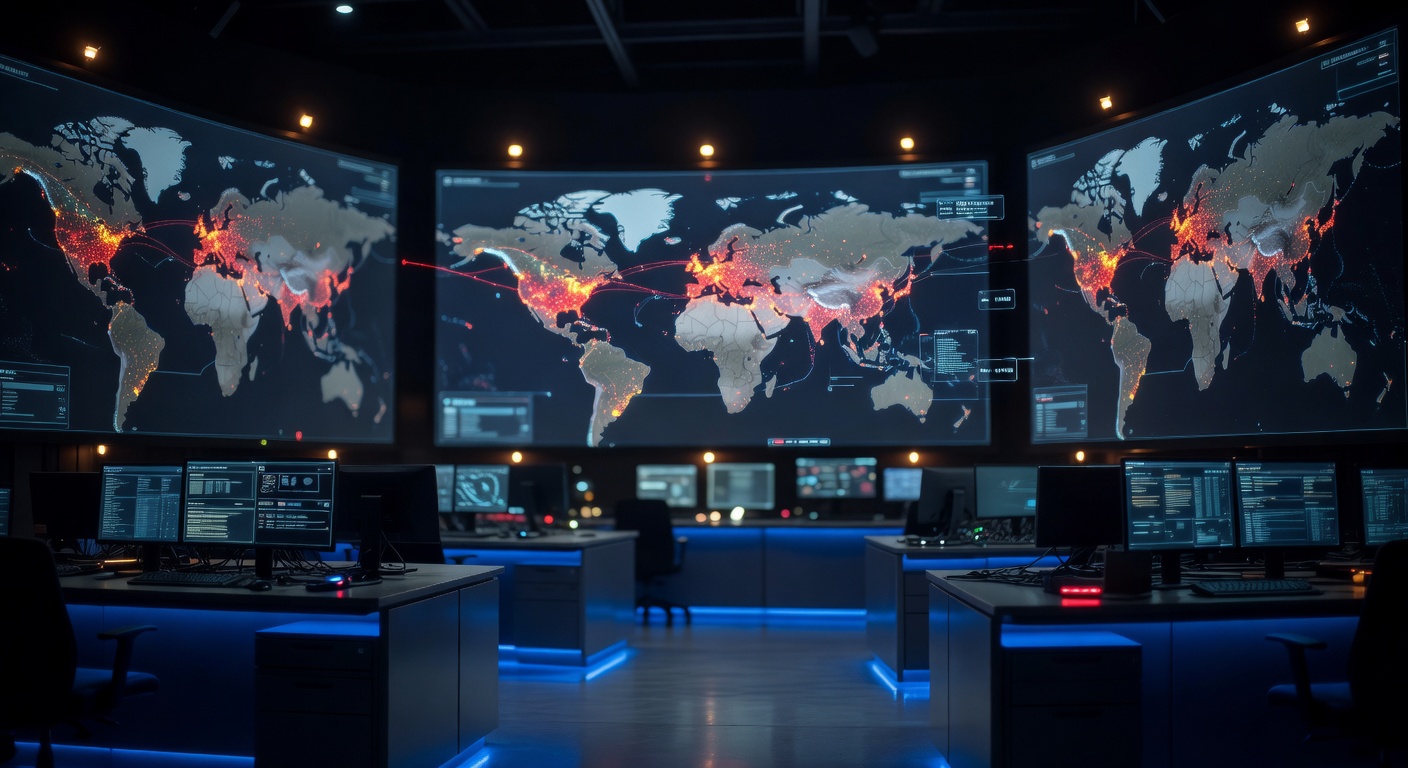
Platforms like World Monitor (11,000+ GitHub stars), Glint, and Monitor the Situation now give any organization with a browser what used to require a six-figure contract with Dataminr or Flashpoint. Conflict tracking. Military flight paths. Undersea cable status. Internet outage maps. AI-generated situation briefs running locally through Ollama.
The cost of seeing what’s happening — anywhere on earth, in real time — is effectively zero.
This is real. The democratization isn’t hype. ACLED conflict data, ADS-B flight feeds, AIS vessel tracking, NASA satellite imagery — all freely accessible. LLMs collapsed the analysis barrier. What used to require an analyst staring at feeds for 8 hours now runs on a laptop overnight.
Philippe Borremans called it the “homemade crisis room.” He’s right that the tools arrived. He’s wrong about what happens next.
The Gap Nobody Talks About
Here’s the sentence that should keep risk directors up at night:
“A red dot on a map is not intelligence. It is a signal that needs to be investigated.” — Philippe Borremans
Exactly. And that investigation — the part that actually protects people, deals, and reputations — is where free tools hit a wall.
What dashboards give you: Data. Signals. Alerts. Patterns. The raw material of intelligence.
What dashboards cannot give you:
-
Verification. A protest marker on a map. Is it real? When was it confirmed? By whom? Has anyone geolocated the source imagery? Cross-referenced it across three independent sources? This is the difference between “something might be happening” and “this is happening, here’s the evidence chain, and it’s admissible.”
-
Chain of custody. When your GC asks “how do we know this is reliable?” — “I saw it on a dashboard” is not an answer that survives scrutiny. Not in a boardroom. Not in a courtroom. Not with a regulator.
-
Contextual interpretation. Two protests in the same city can mean entirely different things depending on who’s organizing, what triggered them, whether they’re escalating or winding down, and who the adjacent actors are. A heatmap doesn’t tell you that. An analyst with domain knowledge does.
-
Escalation discipline. Borremans nails this: “Who sees this data? Who decides what it means? What happens next? If you can’t answer all three, the feed is just expensive wallpaper — even if it was free.” Most organizations running these tools have no documented escalation protocol. The signal fires. Nobody knows what to do with it.
Nico Dekens said it cleanly: “The tool finds the signal. The human determines what it means.” But not just any human. This requires trained researchers who know how to validate, document, and present findings in a way that decision-makers can act on — with confidence and with a defensible methodology.
Where the Real Risk Lives
We’ve seen what happens when organizations confuse access with capability.
A compliance team pulls together a due diligence report using free tools and publicly available databases. They check the registered directors. They run a sanctions screen. They pull some adverse media. The report says “clean.”
What it missed: the nominee shareholder structure three layers deep. The politically exposed person connection through a shell in a jurisdiction that doesn’t publish beneficial ownership registers. The adverse media — in a language the team doesn’t read, published by a source they don’t monitor.
The deal closes. Six months later, the PEP connection surfaces through a leak. The regulator asks: “What did you know, and how did you verify it?”
“We checked” doesn’t work at that point. “We verified through the following methodology, documented with chain of custody, cross-referenced against the following sources” — that works. That’s what separates a monitoring dashboard from a research capability.
The Practical Playbook
This isn’t an argument against free tools. They’re valuable. Here’s how to use them without confusing them for a research capability:
1. Treat dashboards as tripwires, not conclusions.
World Monitor showing conflict escalation near your supply chain? That’s a trigger to investigate — not a finding to act on. Define what constitutes a trigger, who owns the investigation, and what the escalation path looks like. Document it before the alert fires.
2. Verify before you brief.
Every signal needs independent confirmation. Geolocate source imagery. Cross-reference across platforms. Check publication dates. Identify the original source. If you can’t trace the claim to a primary source, it’s unverified — and unverified intelligence is worse than no intelligence because it creates false confidence.
3. Document your methodology.
When you present findings — to leadership, to legal, to a regulator — you need to explain not just what you found but how you found it. What sources did you check? What was your search methodology? What did you exclude and why? This is what makes research defensible. This is what makes it court-admissible.
4. Know your blind spots.
Free tools over-represent online-active regions and under-represent data-dark zones. Sub-Saharan Africa, Central Asia, rural areas — these are precisely the jurisdictions where hidden risk lives. If your monitoring only shows you where the data is rich, you’re blind where it matters most.
5. Build the human layer.
The most underappreciated sentence in Borremans’ piece: “Judgement > coding.” The tools will keep getting better. The gap between a signal and a defensible finding will always require trained human researchers who understand evidence handling, source evaluation, and investigative methodology.
What We Actually Do
We use these same open source tools. World Monitor. Public registries. Satellite imagery. Flight and vessel tracking. The same data everyone has access to.
The difference isn’t the data. It’s what happens after.
Our analysts — former law enforcement, GCFA-certified forensic investigators — apply the same methodology to corporate intelligence that was developed for criminal investigations. Source verification. Evidence chain documentation. Cross-referencing. The kind of rigor that holds up when a regulator asks to see your work.
A dashboard tells you something might be wrong. We tell you what it is, how we know, and we document it in a way you can act on — or hand to your legal team.
That’s the gap. And it’s the gap that matters when the stakes are real.
This analysis was informed by Philippe Borremans’ “The Homemade Crisis Room Is Here” and the ongoing conversation about OSINT democratization in the risk and crisis communication community.